Case studies
Seven stories about building brands, leading creative teams and making ambitious ideas work in the real world.
What worked. What didn’t. What I learned along the way.
| Case | What it proves | Headline proof | Evidence |
|---|---|---|---|
| More Wondering. Less Worrying.Kellogg School of Management | I can rebuild how a creative organization works | Review rounds down from 4–7 to 1–3, with more concept time up front | Operating |
| Own What Comes NextKellogg School of Management | What integrated marketing and communications can look like | 600 alumnae, Oprah Winfrey and Gwynne Shotwell, and a summit designed for women down to the restroom signs | Delivered |
| Become a Kellogg LeaderKellogg School of Management | Creative ambition with financial discipline | Took over a 900K$ campaign and kept it performing at 250K$ | Measured |
| Made for Those Who DoEventbrite · 2019 | Brand building that moves the business | Both test markets beat their control markets; CTR 15x the historical benchmark | Test vs. control |
| Optimism to ImpactKellogg School of Management | Making it anyway | Asked for 350K$, got no. Made it for 49K$; the lead ad ran at four times the benchmark | Vs. benchmark |
| Make the Outside Match the InsideOpenX · 2021–22 | Rebuilding a B2B brand while its industry is rewritten | 19 interviews, a 48-page style guide, a rebuilt site and four launches | Built and launched |
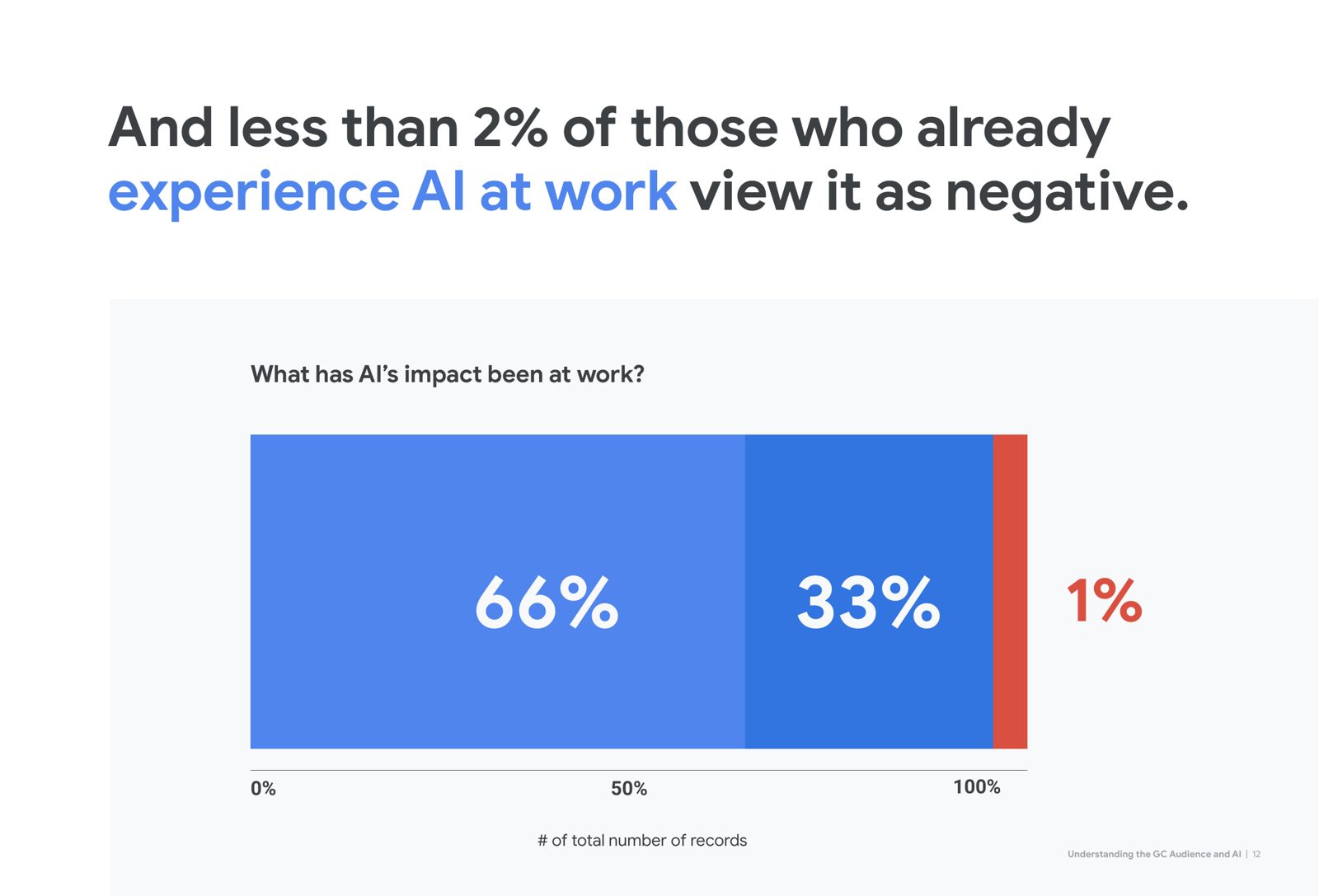
| What Our Audience Thinks About AIGoogle Cloud · 2018 | Turning research into brand direction on AI | 800 decision makers surveyed; fewer than 2% saw AI’s impact at work as negative | Research |
More Wondering. Less Worrying.
Kellogg’s creative studio said yes to everything. I rebuilt it so it could say yes to the right things, and make them better.
- Client
- Kellogg School of Management
- Role
- Senior Director, Creative
- Team
- 9 full-time, 3 freelance, 3 agency partners
- Scope
- Copy, design, video, photography, motion, PM
The situation
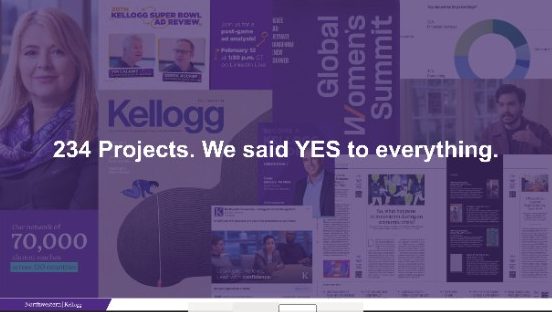
Requests came from everywhere: admissions, alumni relations, the dean’s office, CMC and Exec Ed. Each arrived as a one-off, and most arrived as “big” and “urgent.”
The studio was fast and well liked. It was also reactive, and the best work depended on heroics.
What I built
- A charter. “To be the catalyst for critical thinking and collaboration by every stretch of the imagination.”
- Level of effort, sized up front. S, M, L, XL or XXL, based on three questions: does it need creative strategy, how many assets, and how soon.
- Standards, then self-serve. Units make their own content with studio-built tools. The studio owns the marquee work.
- Concept time, scaled to size. Bigger projects get more thinking time before anything is designed. That time pays for itself in review.
- The D-Framework. One path from discovery to distribution, with a day budget for each stage.
- A weekly rhythm. Monday for resourcing and risks, Wednesday with senior directors for priorities and trade-offs.
The team model
Quarterly planning runs in parallel with the organization’s highest-stakes work. Ad hocs fit between those projects so the studio grows with the organization without burning out. Professional and creative growth sits at the center, because better people make better work.
Along the way: Kellogg’s first social squad, made up of freelancers.
More thinking up front. Fewer rounds of review.
Operating
- Size the work before you start it. Strategy, number of assets and deadline decide how much thinking a project gets.
- Spend the time up front. More concept time means fewer rounds spent finding the idea in review.
- Save the studio for what matters. Units serve themselves with studio tools; the studio owns the marquee work.
The D-Framework: six stages, scaled to the work
The longest stage is protected time for thinking, experimentation and refinement. An illustrative timeline for complex projects. Timelines scale with the scope and complexity of the work. The Design phase includes concept development, copywriting, design, prototyping, creative exploration and review, not simply execution.
Why it matters
234 projects is workload, not productivity. The point of the rebuild was to change where the hours go: more into thinking, fewer into rework. Sizing every request at intake is what makes that trade possible, because the studio knows before it starts how much thinking a project has earned.
What’s next
An intake readiness test, so work starts when a request has enough to start on. Per-person capacity views, so trade-offs are visible before they become overtime. And one planning process across marketing and communications, tied to the school’s priorities instead of a stream of disconnected requests.
Own What Comes Next
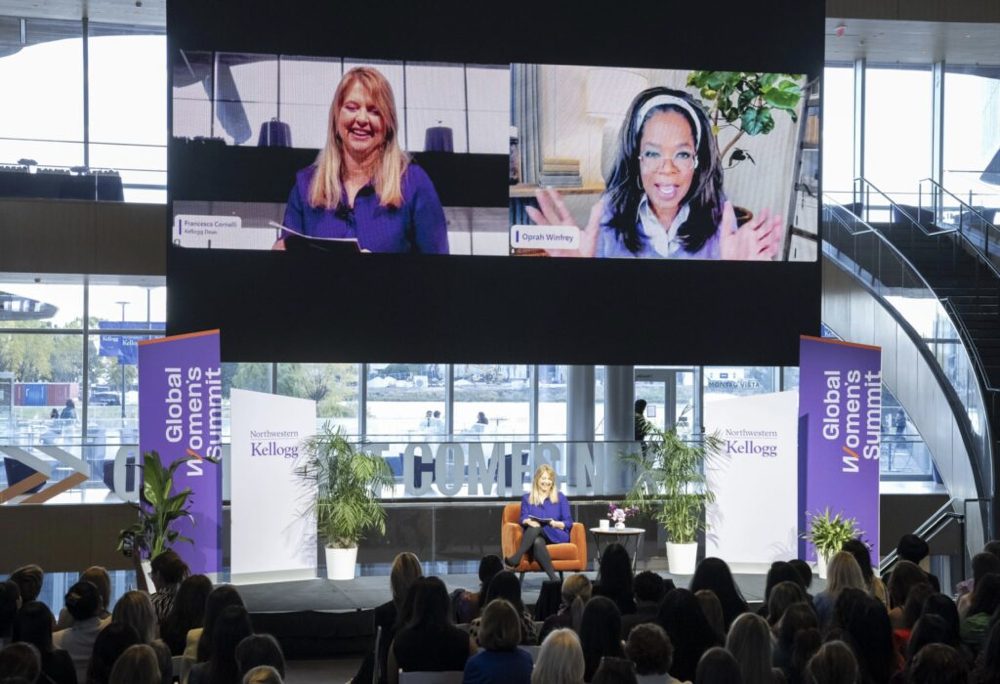
We didn’t design a summit. We staged a takeover: the Kellogg Global Women’s Summit, built by one team that planned the ideas and the logistics together.
- Client
- Kellogg School of Management
- Role
- Senior Director, Creative
- Year
- 2024
- Speakers
- Oprah Winfrey; Gwynne Shotwell, President and COO, SpaceX; Dean Francesca Cornelli
- Partners
- Grip, design agency
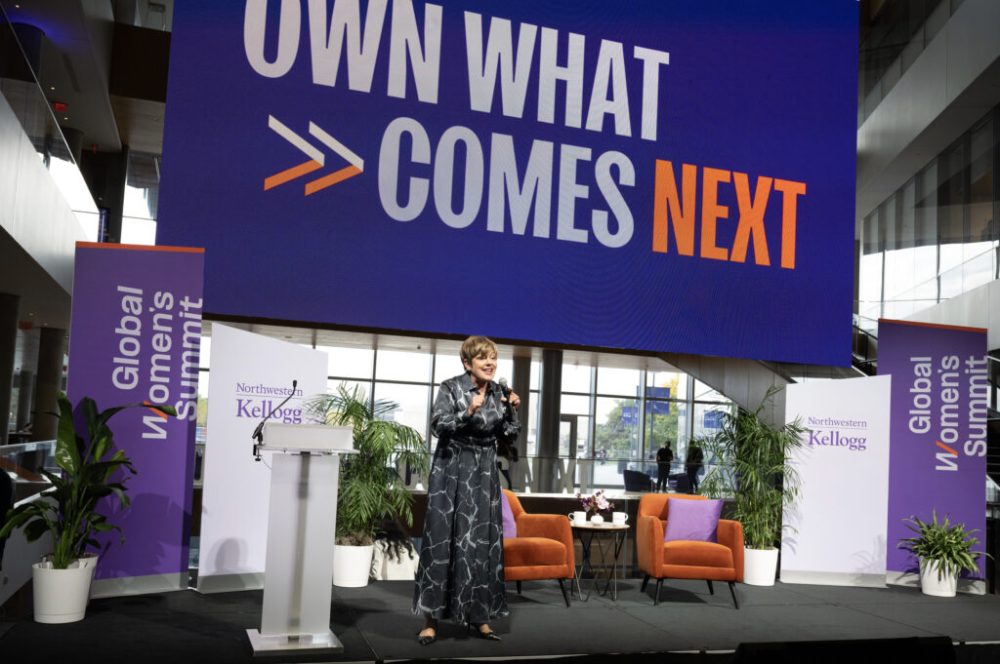
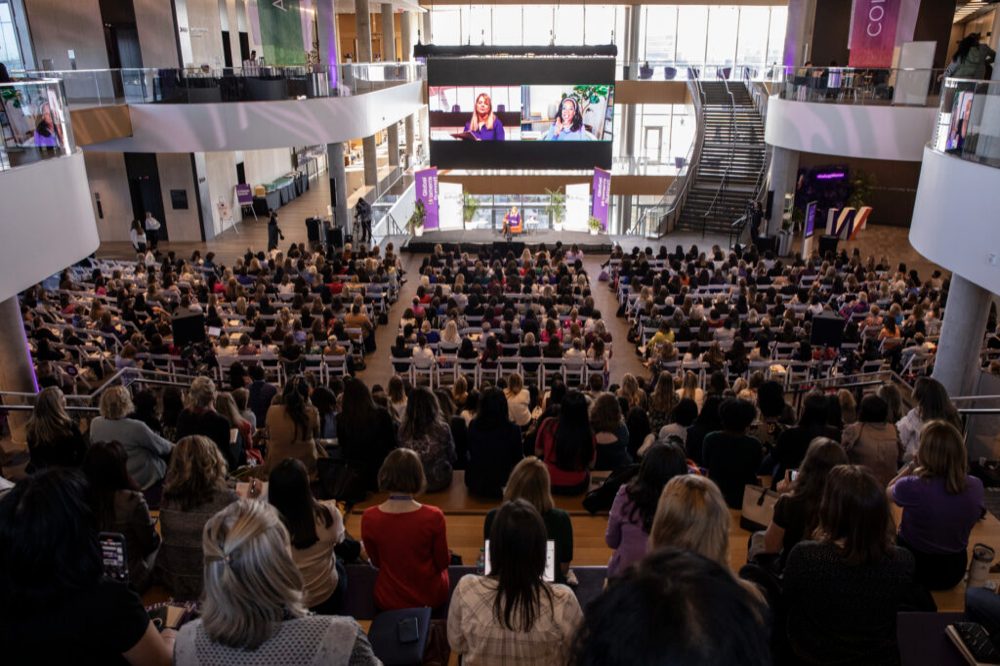
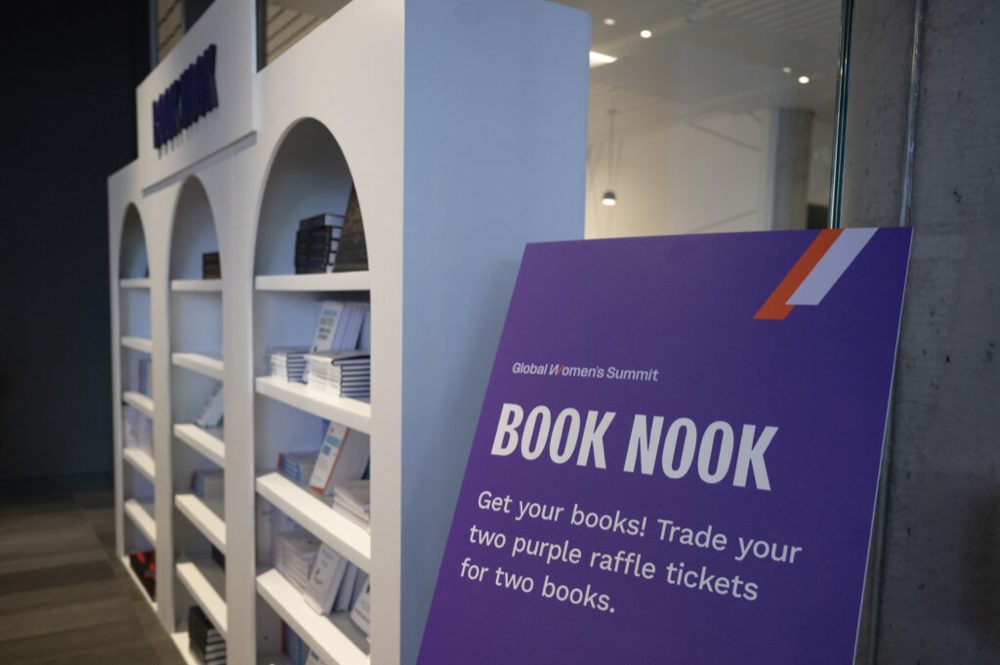
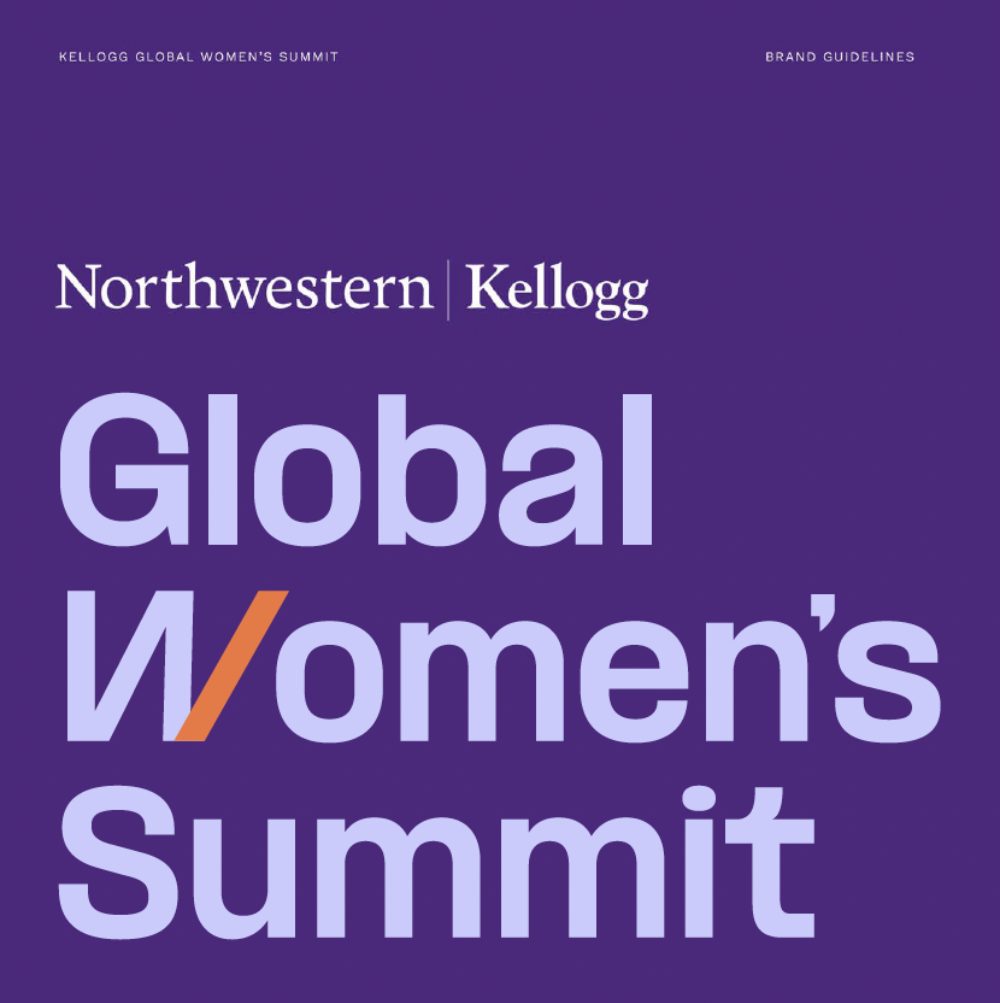
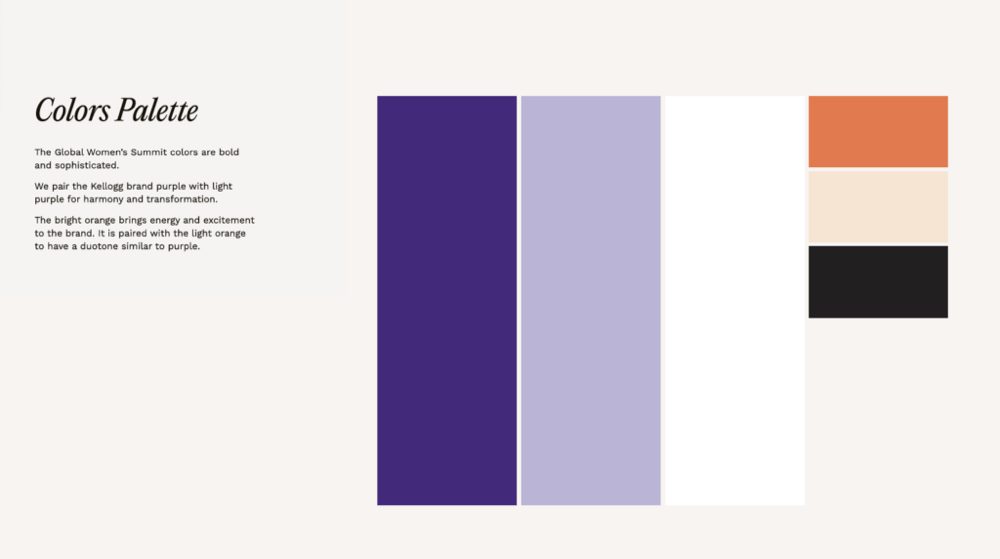
This wasn’t just a comeback. It was a recalibration.
The insight
Kellogg has never been in the business of producing followers. It builds leaders who walk into a room and quietly tilt the axis. And Kellogg women are leading in an era when women hold more wealth, power and influence than ever.
After years apart since the first Global Women’s Summit, we brought 600 alumnae back together.
How we worked
Creative, communications, events and digital usually work in sequence: one team has the idea, the next figures out how to pull it off. I pushed for a single experience team instead, so ideas and logistics were planned together from the first meeting.
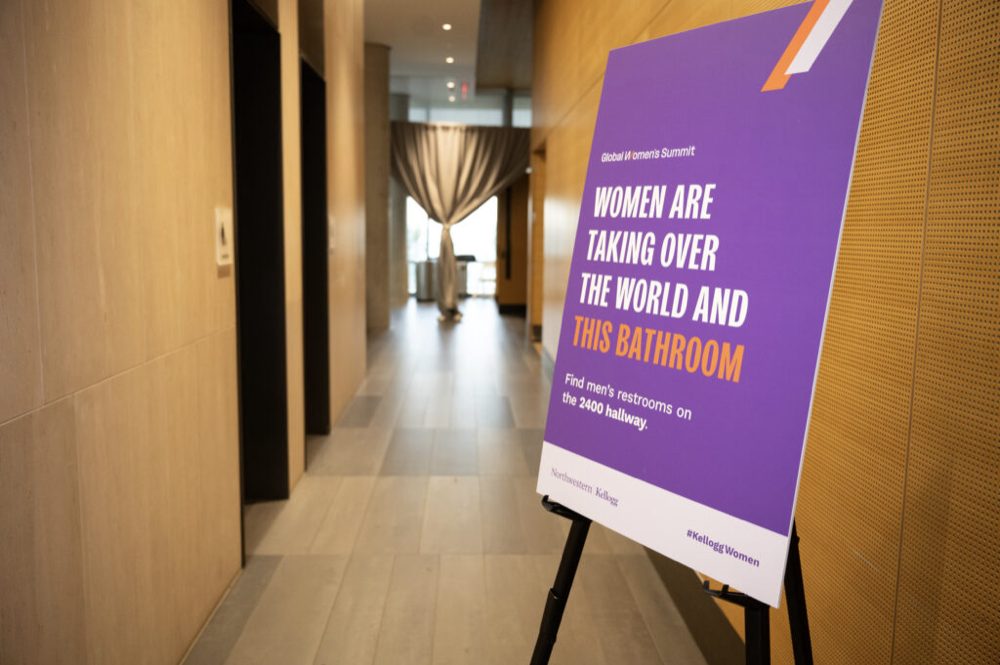
That’s how one idea, a takeover, showed up everywhere: on billboards, on stage, even on the restroom doors.
Every detail, designed for women
- An all-female crew.
- The men’s restrooms, flipped. “Women are taking over the world and this bathroom.”
- Poker as a metaphor for power.
- One narrative engine. Own What Comes Next ran across digital billboards, storefronts, social and the stage.
A summit that looked like the women in the room.
Delivered
- Plan the idea and the logistics together. When the people who imagine it sit with the people who build it, the details stop getting cut.
- Design for the audience in every detail. The restroom signs mattered as much as the headliners.
- Give the event a line to own. Own What Comes Next was a theme, a brand and a call to action at once.
What it meant to me
I got to think through every detail and ask the same question each time: does this feel like it was made for her? From the crew to the signage to who stood on the stage, the answer had to be yes.
Looking back
None of us knew what was coming: geopolitical upheaval, confusion about AI, new constraints on higher education. That makes the room feel more important, not less. It showed what this community can do when it gathers on purpose.
Become a Kellogg Leader
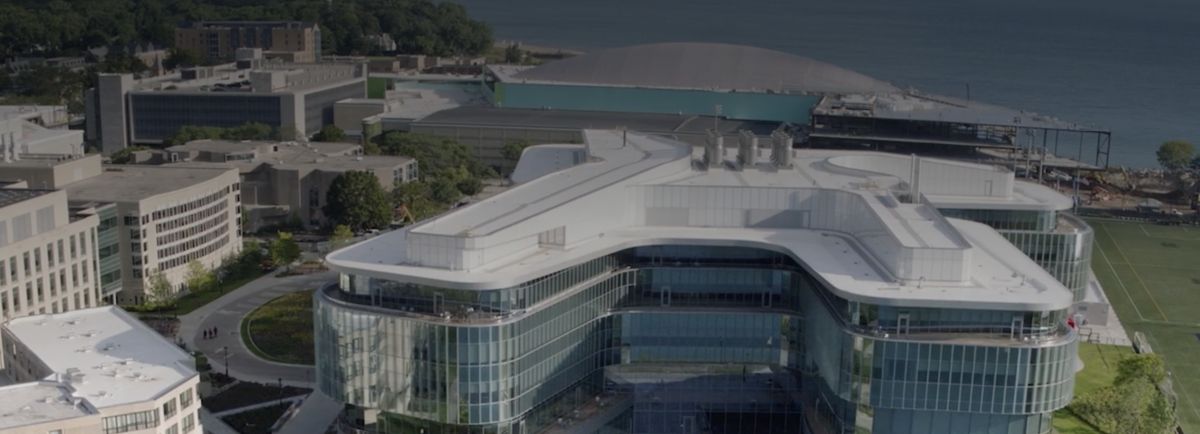
I took over Kellogg’s flagship brand campaign with a quarter of the production budget it launched with. It kept performing, and it became the brand halo for every degree program.
- Client
- Kellogg School of Management
- Role
- Senior Director, Creative
- Audiences
- Full-Time, Evening & Weekend, Executive MBA, MiM
- Budget
- 250K$ in production, down from 900K$
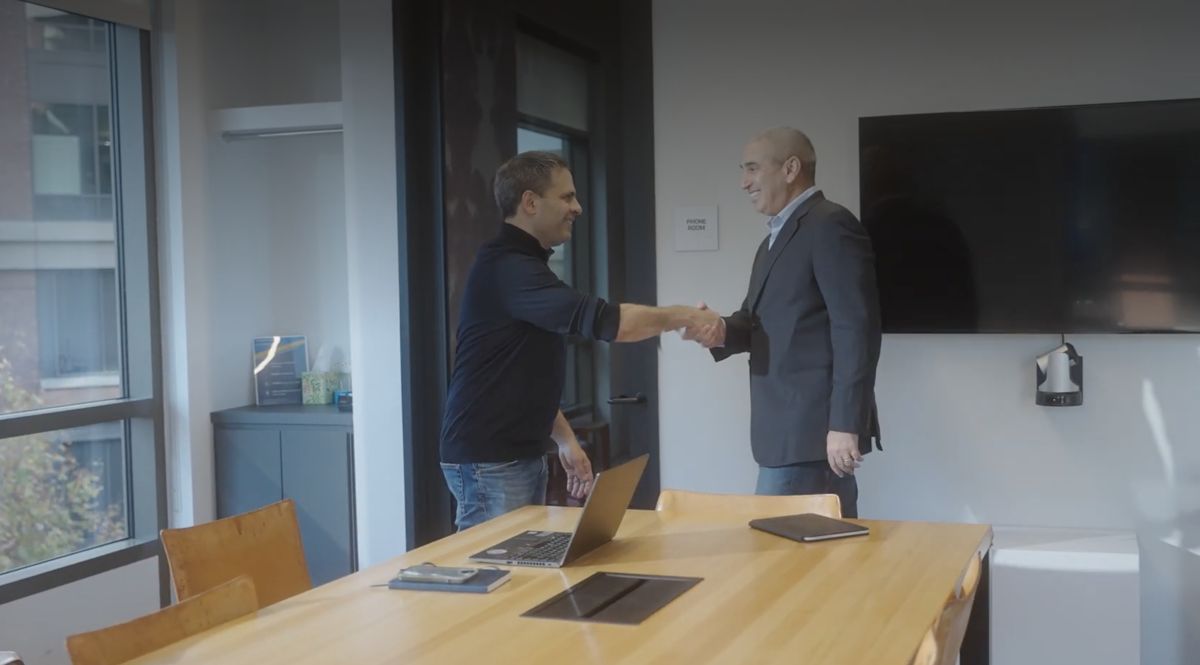
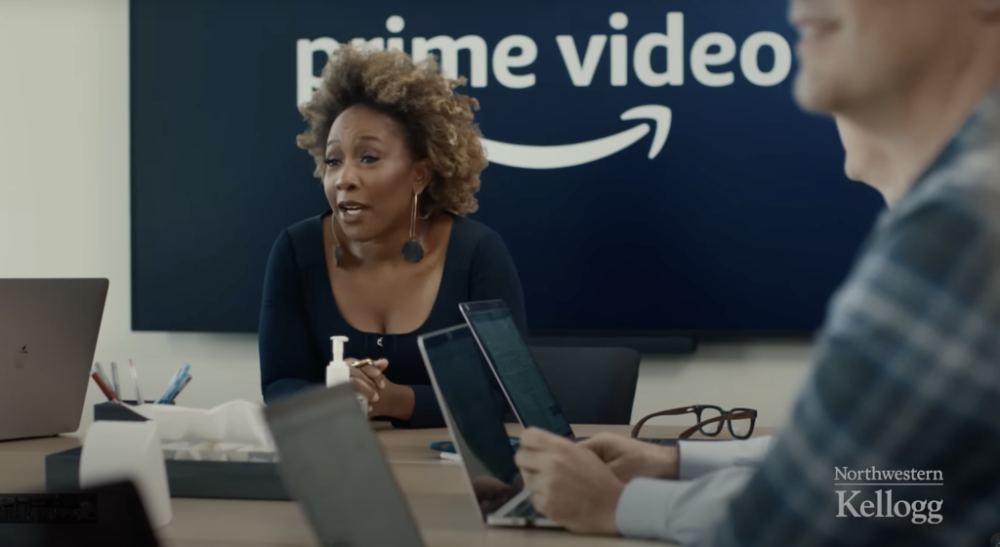
Smart isn’t enough.Creative pillar. Intelligence gets you in the room. Range is what carries it.
The brief
Prospects can succeed without an MBA. The campaign had to show how a Kellogg MBA changes the scale, speed and shape of that success, in a market where the M7 all sell the same promise.
We positioned Kellogg as the Champion: the one school whose identity is about building others, not individual achievement.
The launch set a high bar: 130M impressions in its first eleven weeks. My job was to keep that going with far less.
What I decided
- Cinematic stories over talking heads. Fewer pieces, each with a real arc.
- Cast deliberately. Featured leaders chosen for proof, not prominence alone.
- Reuse what already proves the point. Existing footage went back to work.
- Fewer review rounds. Decisions made once, by the right people.
- Cut the crew to the essentials. I took sets from 15–20 people down to the people the story needed, and held the quality bar wherever it showed.
The next chapter
The platform now feeds a full-funnel video system organized around the questions prospects actually carry: Can I afford this? Can my life absorb it? Do I belong here? Will anything really change?
It runs from awareness through admission to alumni, so one shoot serves every stage.
A quarter of the budget. Still lifting every program four years later.
Measured
- Put the money on screen. The savings came out of crew size, review rounds and habit, not out of the films.
- The stories kept landing. Every alumni profile beat the blog’s benchmark. Roshni Malhotra’s drew 1,400 page views, three times the bar.
- It lifts every degree program. Kellogg’s own reporting calls BAKL the brand halo across programs. People who saw it first on LinkedIn were more likely to open later messages, submit a lead or convert through another program’s campaign. Even as inquiries softened, application starts and submits held.
How the cost came down
Every dollar cut came out of process, not the screen. Fewer, longer stories. Leaders cast for proof. Existing footage put back to work. Crews cut from 15–20 to the essentials. Fewer review rounds, decided once by the right people.
Why it lasted
BAKL was built as a platform, not a flight. It works as the brand halo across Full-Time, Evening & Weekend and Executive MBA, so each new chapter adds to it instead of starting over.
Made for Those Who Do
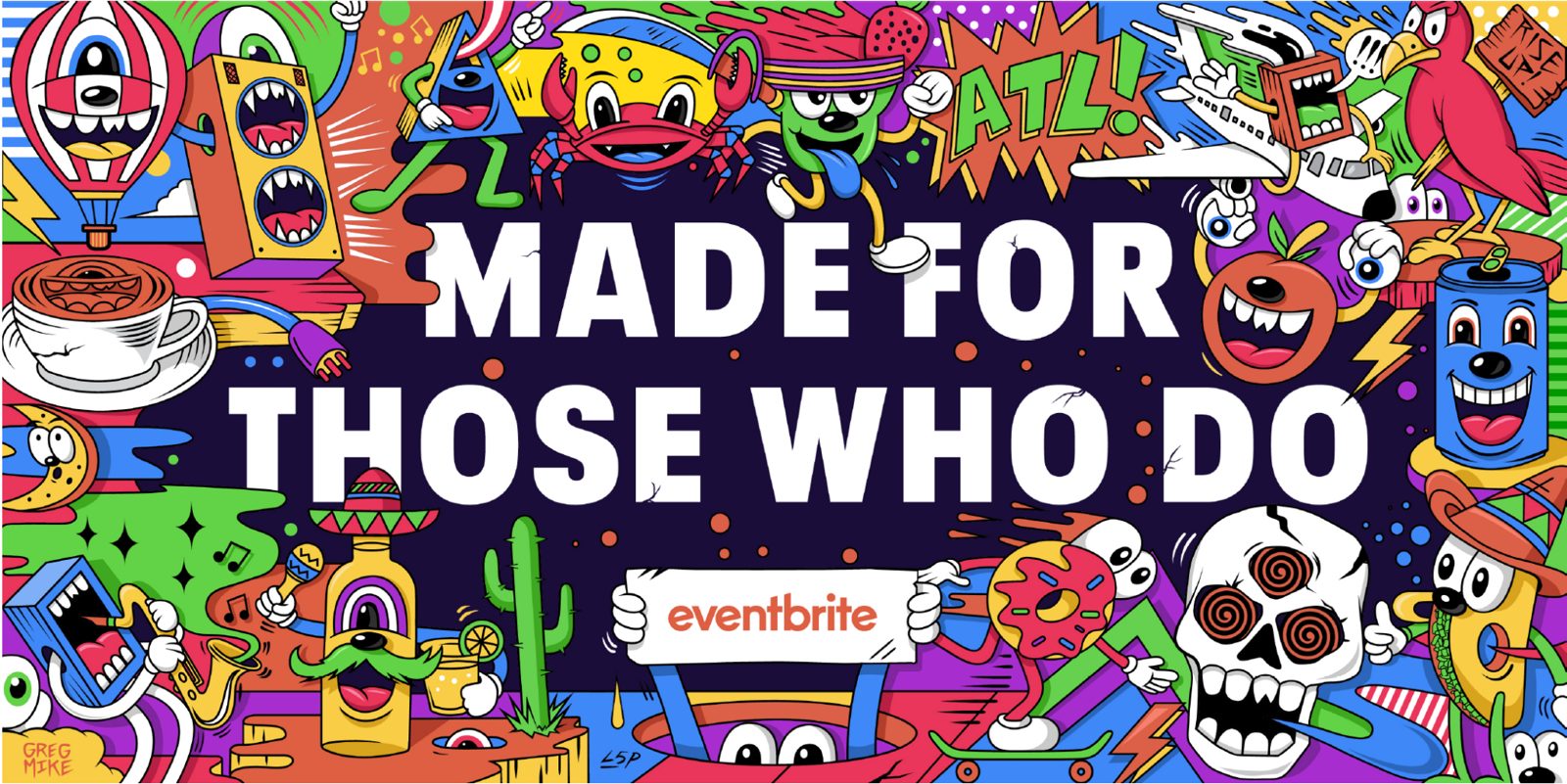
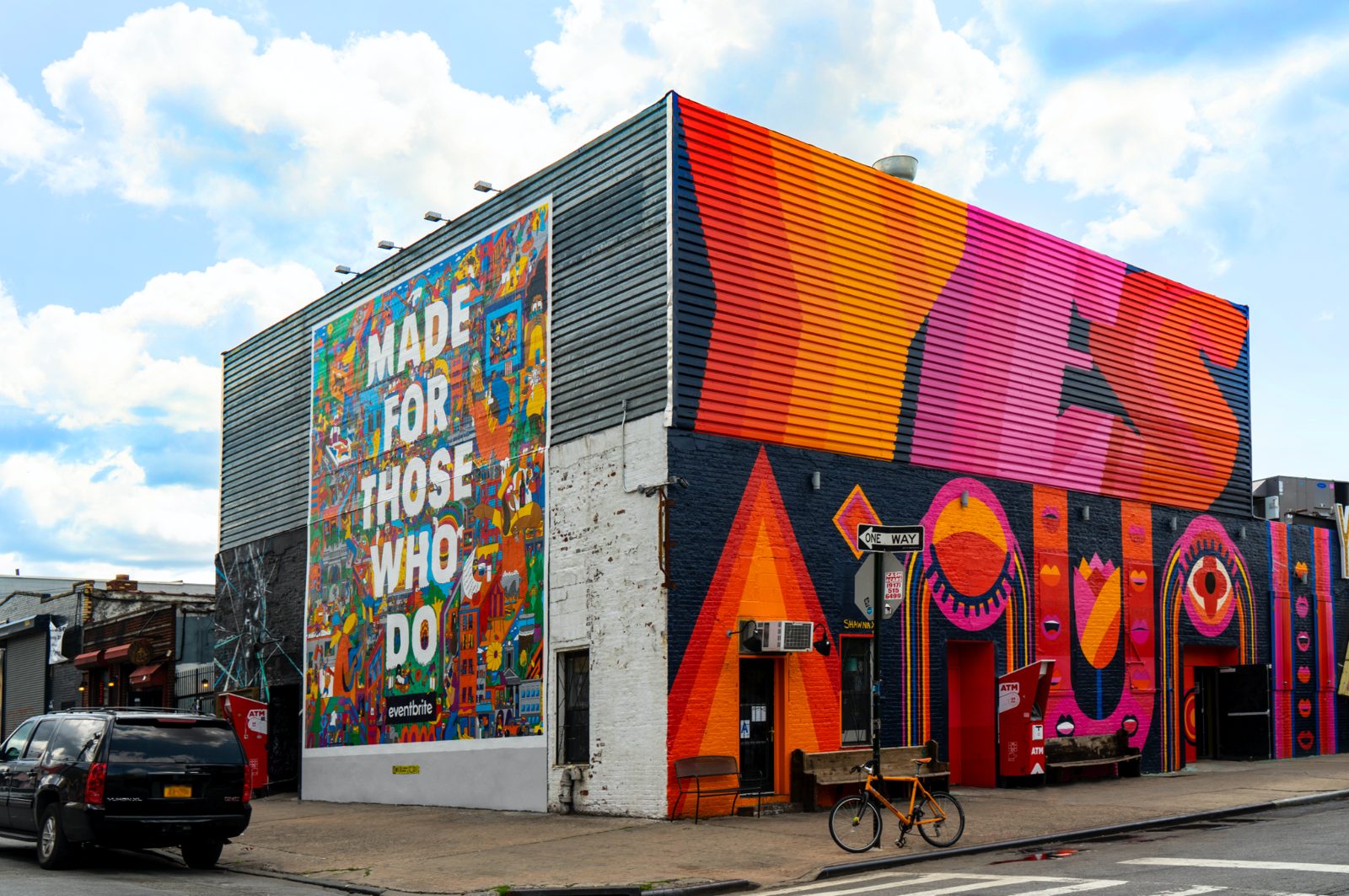
Big brands speak in broad strokes. People live block by block. So we went to two neighborhoods and talked like locals.
- Client
- Eventbrite
- Role
- Senior Manager, Brand + Creative. Wrote the brief; ran the studio
- Markets
- Brooklyn and Atlanta, against Boston and Austin
- Media
- 550K$: 200K$ outdoor, 300K$ paid social, 50K$ influencer
- Partners
- Giant Spoon; Colossal; artists Mike Perry and Greg Mike
The bet
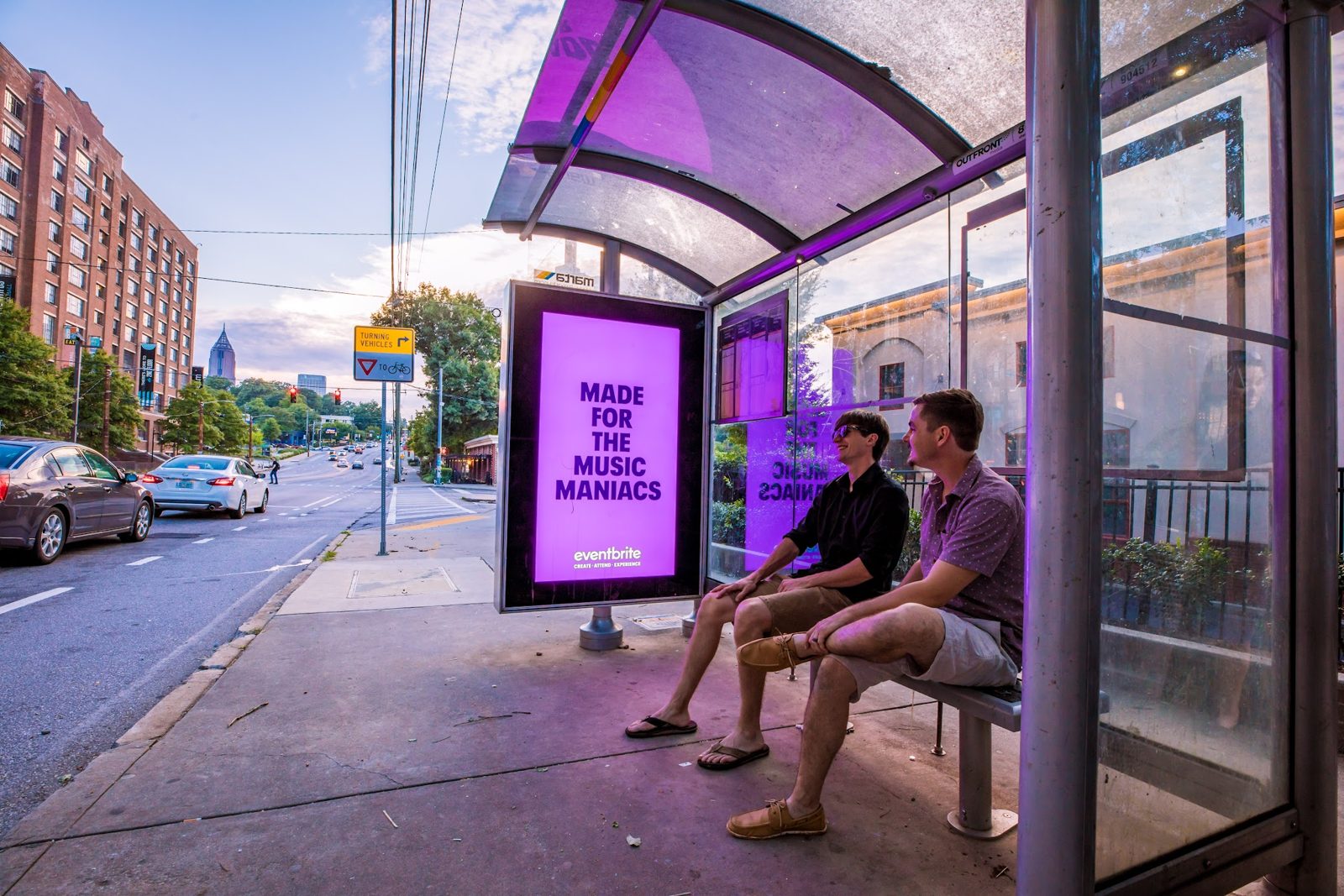
Driving awareness at the top of the funnel would lift the business underneath it: ticket sales and new creators on the platform. Instead of a national flight, we ran a test. Two markets got the campaign; two matched markets didn’t.
What I decided
- Local artists, local voice. Murals by Mike Perry with Colossal in Brooklyn and Greg Mike in Atlanta.
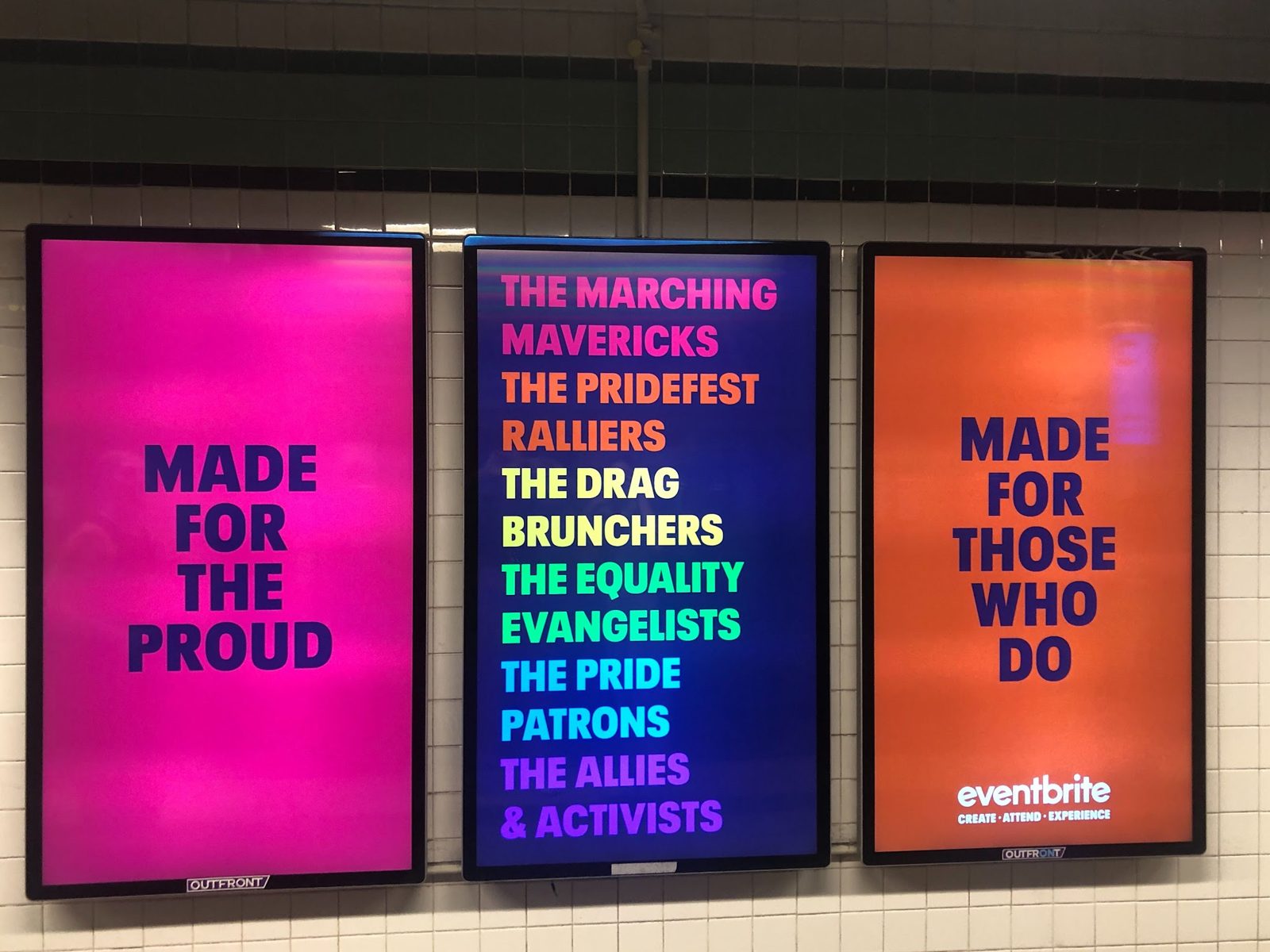
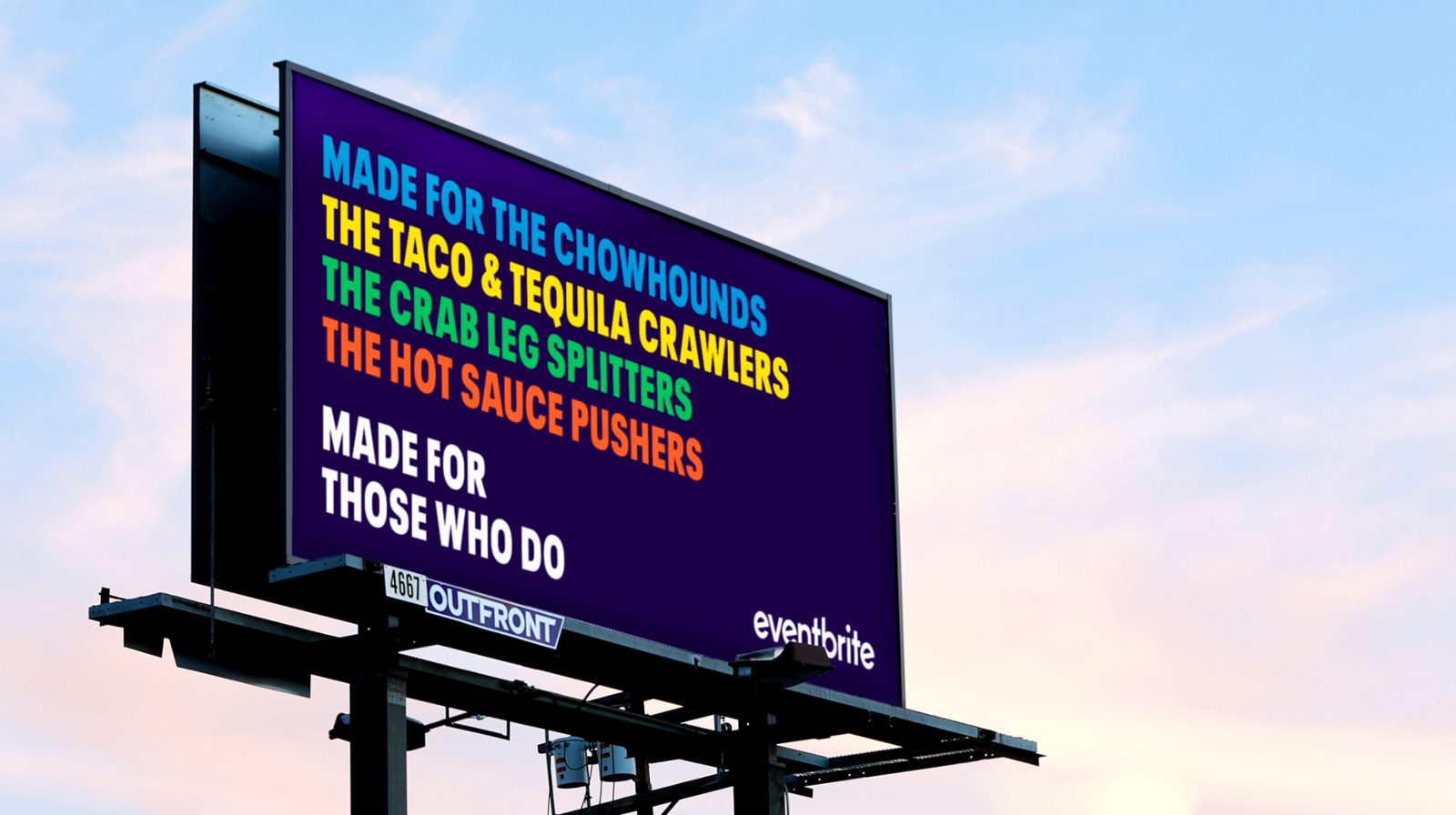
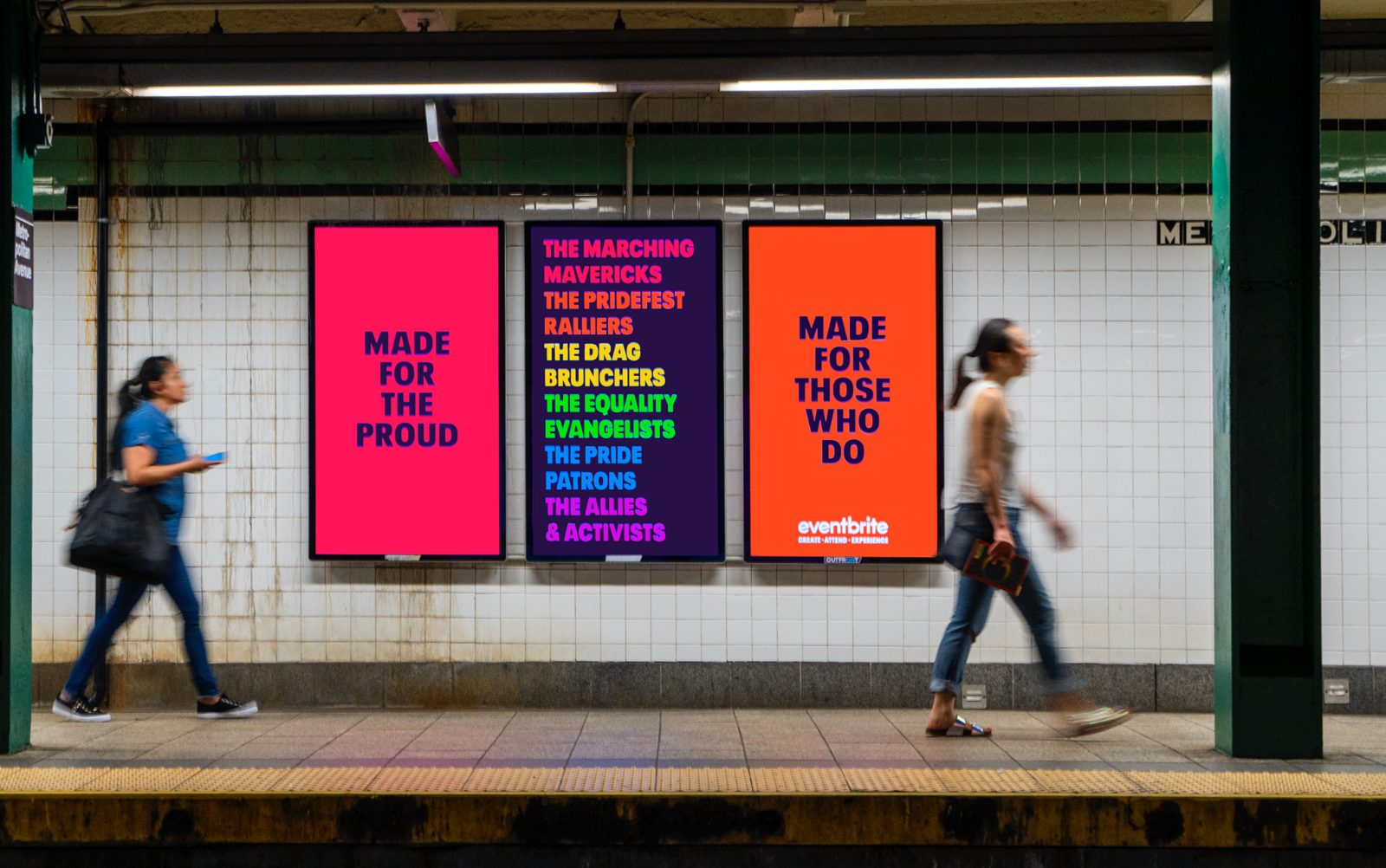
- Name the people, not the category. The chowhounds, the pub crawlers, the IPA alchemists.
- Three passions, tested. Food and drink, yoga, hip hop.
- Test everything we argued about. Photo vs. text, sound on vs. off, Stories vs. feed, influencer vs. campaign creative.
Activations
Celebrate Brooklyn, Daybreaker, the Week of Do influencer program with 11 creators, and six editorial collections on Eventbrite highlighting the best food, yoga and hip hop events in each city.
Both test markets beat their controls. We missed our own stretch goal.
Test vs. control
- Local beats national. Neighborhood artists and neighborhood language outperformed anything we’d run before.
- Photography sold the tickets. Real people at real events drove most of the sales.
- Brand moved the business. Both test markets outsold their controls and Brooklyn’s unaided awareness rose from 15% to 18%, short of the 20% sales lift we aimed for.
What we missed
We set out for 20% more tickets and 20% more new creators in market. We got +12% and +3% on tickets, and new creators grew 3% in Atlanta and 5% in Brooklyn. The flight was too short for a creator decision cycle. I’d set that goal over a longer window next time.
What I’d keep
The test design. It gave Eventbrite its first clean read on what brand spend does to local business, and new creative benchmarks the team kept using: photography over text, Stories over feed, sound on, and longer flights for the categories that peak.
Optimism to Impact
Kellogg is the #2 business school for healthcare by reputation. I asked for 350K$ to make the case for #1. The answer was no. So I made it with the small video budget we already had.
- Client
- Kellogg School of Management, Healthcare at Kellogg
- Role
- Creative lead and producer
- Format
- Trailer plus four episodes
- Budget
- 49K$: 39K$ production, 10K$ paid. The ask was 350K$
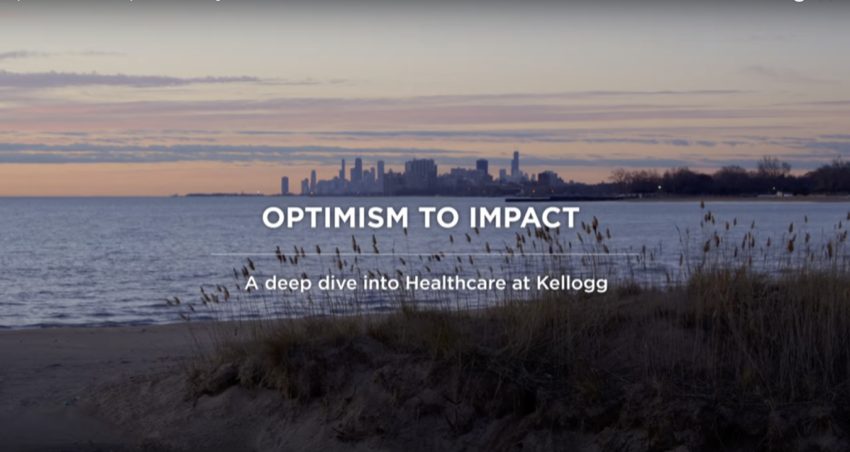
Lead the future we can all be well in.Series end frame
The insight
No other curriculum puts Full-Time, Evening & Weekend and Executive MBA students in one room with senior healthcare executives to break down the walls between biopharma, insurance and private equity.
And 40% of EMBA “learning leaders” say they’re likely to specialize in healthcare.
What we made
A series that follows three intense Deep Dive weekends, built around one idea a lecturer gave us on camera: the alchemy of pragmatic optimism. Practical enough to fix a broken system, optimistic enough to want to.
With a seventh of the budget I asked for, it became a labor of love: a lean crew, long weekends and a lot of edits.
What we learned
- Short wins. The 51-second trailer held viewers better than any full episode.
- Paid finds the winner. Platforms put spend behind the strongest ad, so one cut carried both campaigns.
- Timing matters. The February boost far outperformed December’s.
- Owned pages don’t drive views. Hosting long-form on the website brought little traffic.
Made on a seventh of the ask. Paid crushed the benchmark.
Vs. benchmark
- Short wins. The 51-second trailer held viewers better than any full episode.
- Long-form needs a reason to watch. Episodes on owned pages drew little traffic.
- A no isn’t the end of the idea. A smaller budget forced sharper choices, and the paid results held up against campaigns that cost far more.
Make the Outside Match the Inside
OpenX had the technology, the customers and the culture. What it didn’t have was a way to say so. Everyone knew the name. Nobody felt anything about it.
- Client
- OpenX
- Role
- Creative Director, Corporate Marketing
- Years
- 2021–2022, Los Angeles
- Context
- Layoffs, Covid, and the end of third-party cookies
- Partners
- Wonder Giant: site, blog and Figma design system
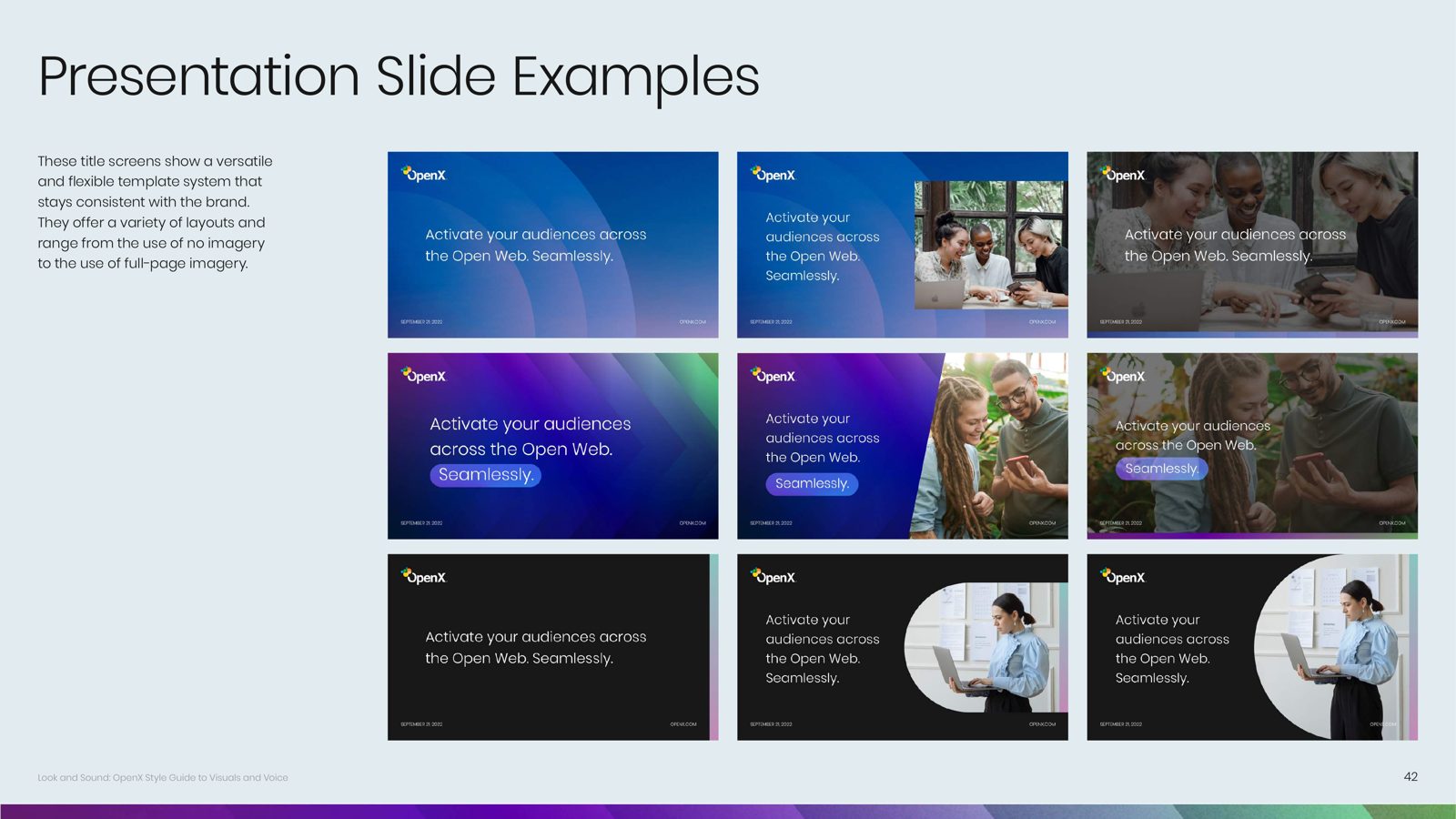
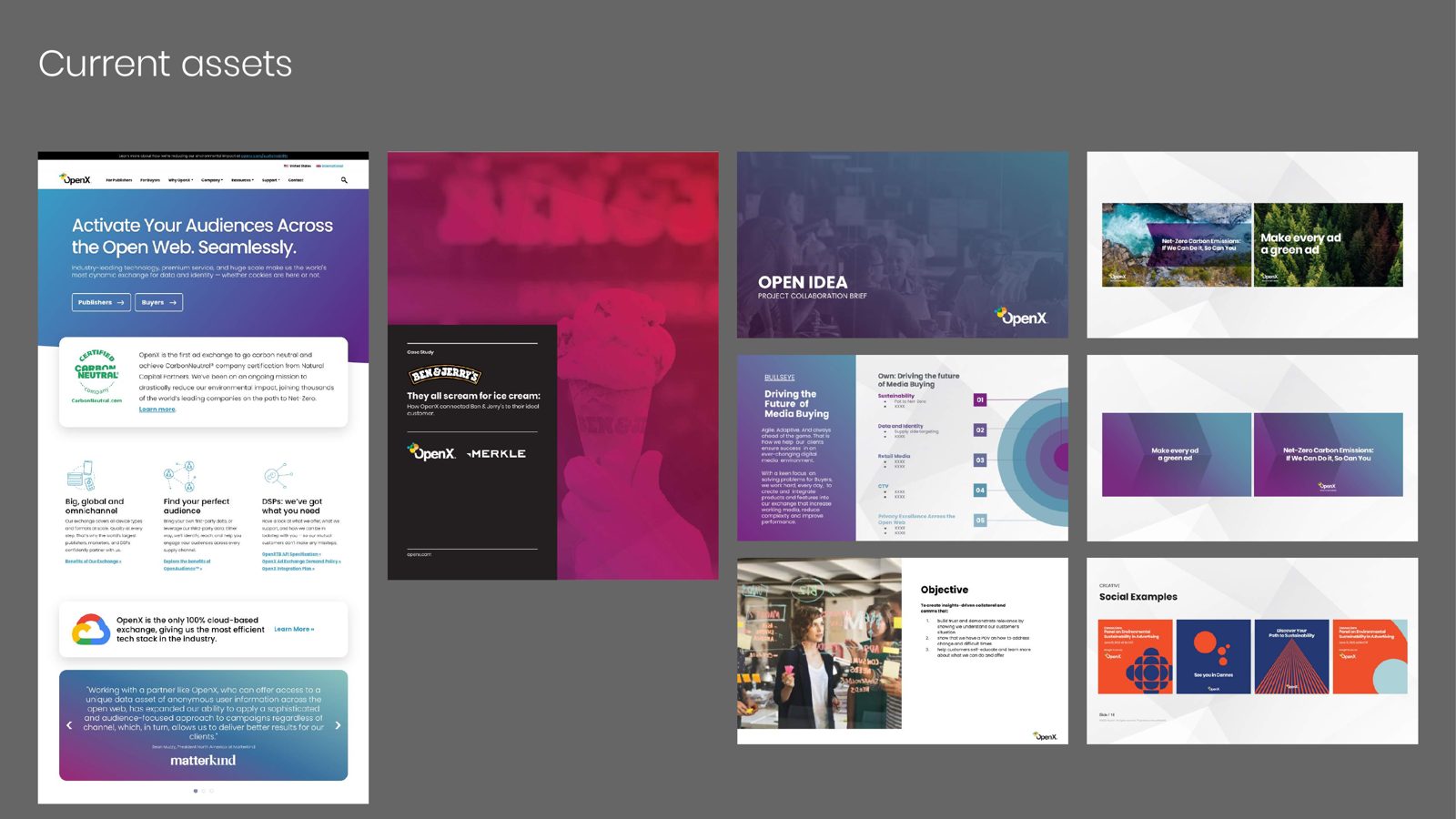
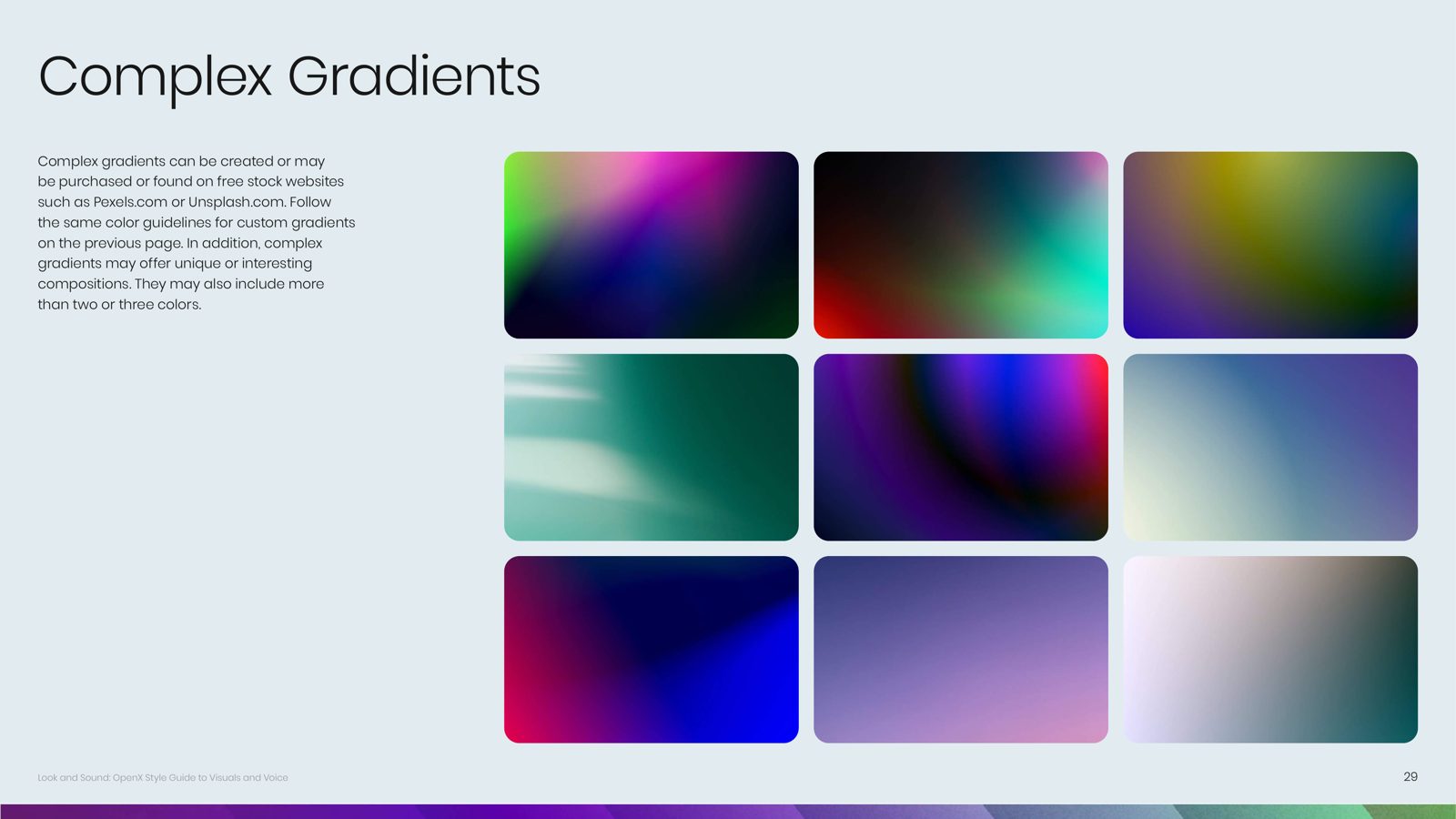
We need our outsides to match our insides.The finding from my first 30 days
The situation
The company had slimmed down and, in one employee’s words, was “in the best fighting shape of our lives.” But nearly half the staff had been there less than a year, the market was being rewritten by privacy rules, and the brand was a set of right pieces without a common thread.
The brief I wrote named the problem: high awareness, low impression. The ask was to move OpenX from vendor to partner.
What I did first
- Listened. 19 interviews with employees across functions and regions.
- Audited. Every internal and external document, the messaging, the identity and the competition.
- Named the gap. OpenX was good at a lot of things and bad at articulating any of them.
What I built
- A vision. A world where the open web thrives.
- Principles. Focus on the customer. The B in B2B is never boring. Champion being open and inclusive.
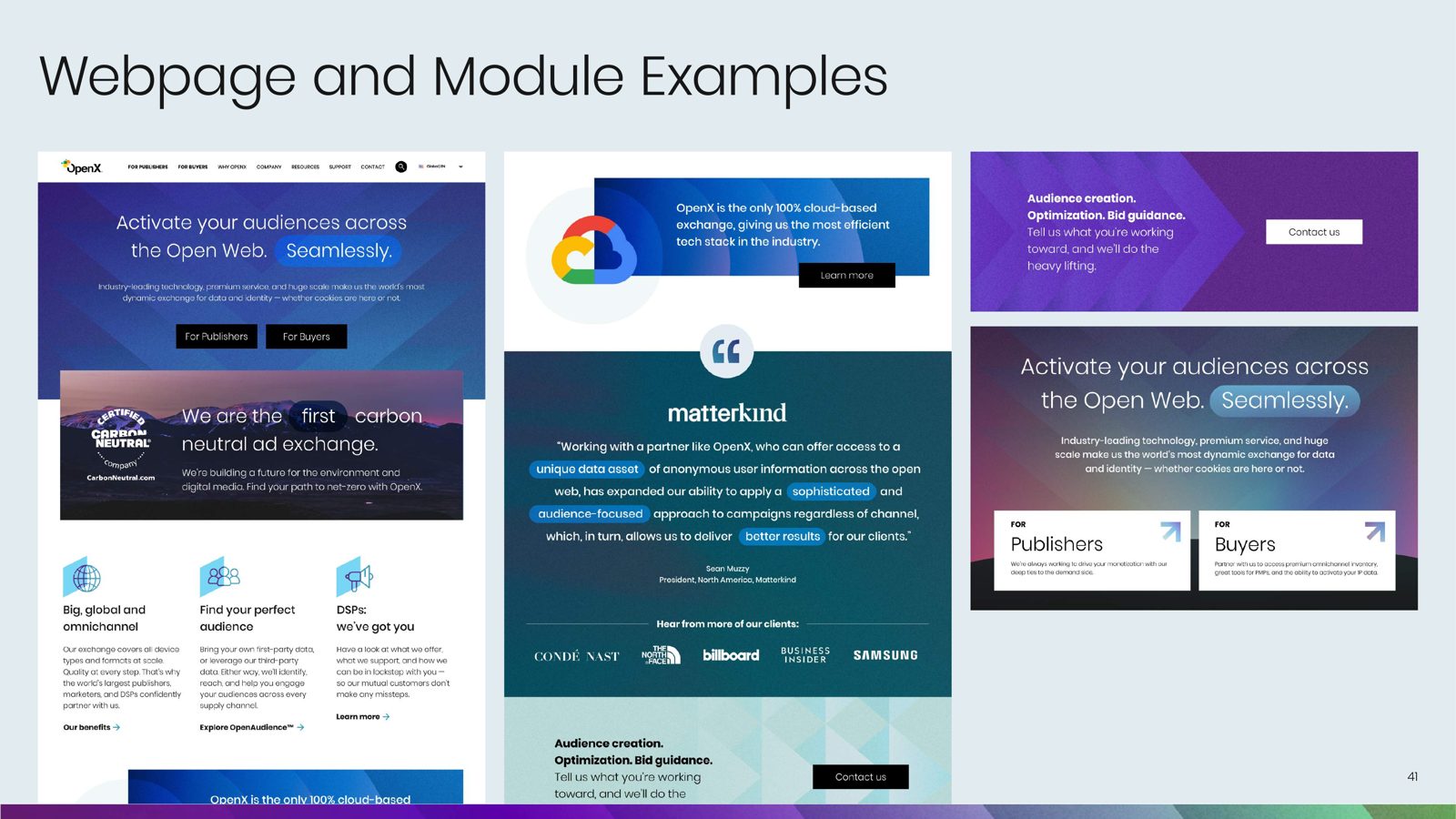
- A look and a sound. A 48-page style guide: personality (knowledgeable, innovative, driven), mood (energetic, bold, smart), logo, color, gradients, imagery, iconography and a voice that is straightforward, knowledgeable, optimistic and actionable.
- A process. Discover, Define, Design, Develop, Deliver, Distribute, with an intake doc to start every project.
- A bench. Writers, designers, animators, illustrators and strategists, plus Wonder Giant to rebuild the site and blog from scratch on a Figma design system.
I left before the brand had a year in market. Here’s what shipped.
Built and launched
- Inside first. With half the company new, the brand had to be taught internally before it could be believed externally.
- Set the yardsticks early. Brand impression, customer recommendation scores and service interactions were written into the brief.
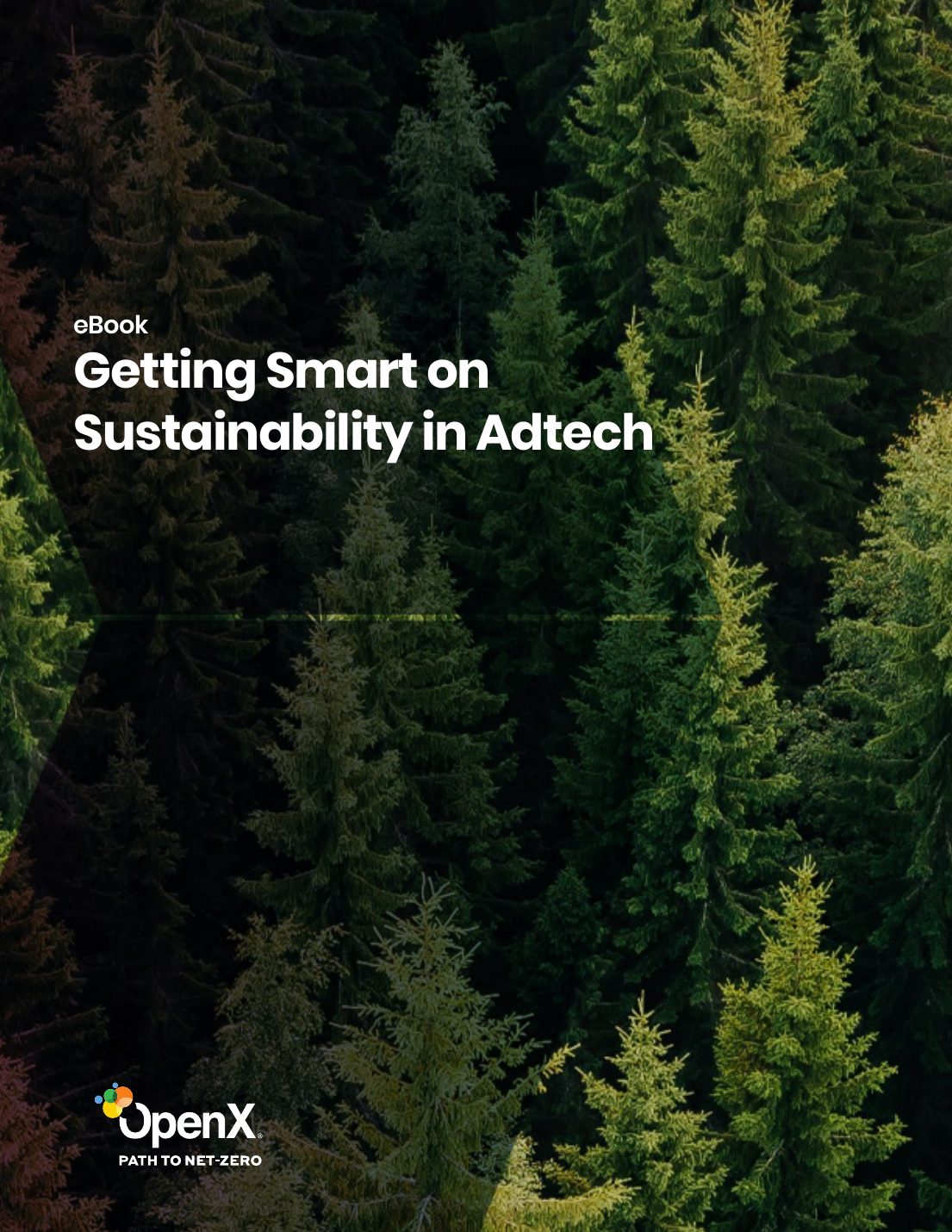
- Give the brand something true to say. The sustainability work brought a real milestone to market: emissions cut 96.3%.
Why there’s no final number
I left OpenX in 2022, before the brand had a full year in market. Case studies that claim results their author never saw are easy to spot. This one shows what I found, what I built, and the yardsticks I set so the work would be judged on outcomes.
What traveled
The six-stage process I built at OpenX is the D-Framework my Kellogg studio runs today. So is the belief that a brand has to work inside a company before it can work outside it.
What Our Audience Thinks About AI
In 2018, Google Cloud expected the executives it sold to would be afraid of AI. They weren’t. The harder problem was inside their companies.
- Client
- Google Cloud brand team
- Role
- Brand strategist and writer, consulting
- Year
- 2018
- Format
- 55-page research report for Google’s marketers
The question
How should Google Cloud talk about AI to the two people who buy it together: the IT decision maker and the business decision maker? And how far apart were Google’s assumptions from what those buyers actually thought?
The research
A survey of 800 US IT and business decision makers, from directors to the C-suite. Interviews with technology and business leaders at Kraft Heinz, Sephora, Levi Strauss, Aon, Activision Blizzard and Perdue Farms. And Google’s own AI and marketing leaders, to measure perception against reality.
What it told the brand
- Educate, everyone. Executives were confident; their teams were not. Messaging had to inform the C-suite and validate the practitioners.
- Lead on ethics. Expertise and security were the cost of entry. Support, tangible value and ethics decided the sale.
- Show the use case. “I would not start something unless I see tangible value.”
We expected fear. We found appetite.
Research
- Educate everyone. Executives were confident about AI. Their teams weren’t.
- Lead on ethics. Expertise and security got Google in the door. Support, value and ethics won the deal.
- Show the use case. Buyers wanted proof of value before they started anything.
Why it still matters
Who’s excited and who’s anxious. What has to be true before anyone trusts it. Why a demo beats a promise. I was working through those questions with enterprise buyers eight years ago, which is why I treat AI as a leadership problem before it’s a tools problem.
High standards, zero tantrums.
Standards, then self-serve
Set the bar, give teams the tools to clear it themselves, and save the studio for the work that moves the institution.
Brief before beauty
Six stages, and design doesn’t start until the problem is defined. Most bad work is a good answer to the wrong question.
Measure, then say so
Test against a control when you can and a benchmark when you can’t. Report what underperformed as plainly as what worked.
Spend where it shows
Ambition and budget aren’t opposites. Put the money on screen and take it out of the habits.
I’m interested in what AI makes possible, and even more in what it makes necessary: better judgment, stronger ideas, clearer creative direction, and teams that spend less time on the repetitive stuff and more time making something worth paying attention to.
Hiring a VP or head of brand and creative?
I build brands, the studios that make them, and the systems that let both get better every year. Twenty years across agency, marketplace, ad tech and higher education.